
Sori Yanagi / Washoki Series / Kyusu Teapot - Gosu Monzuke
Sori Yanagi / Washoki Series
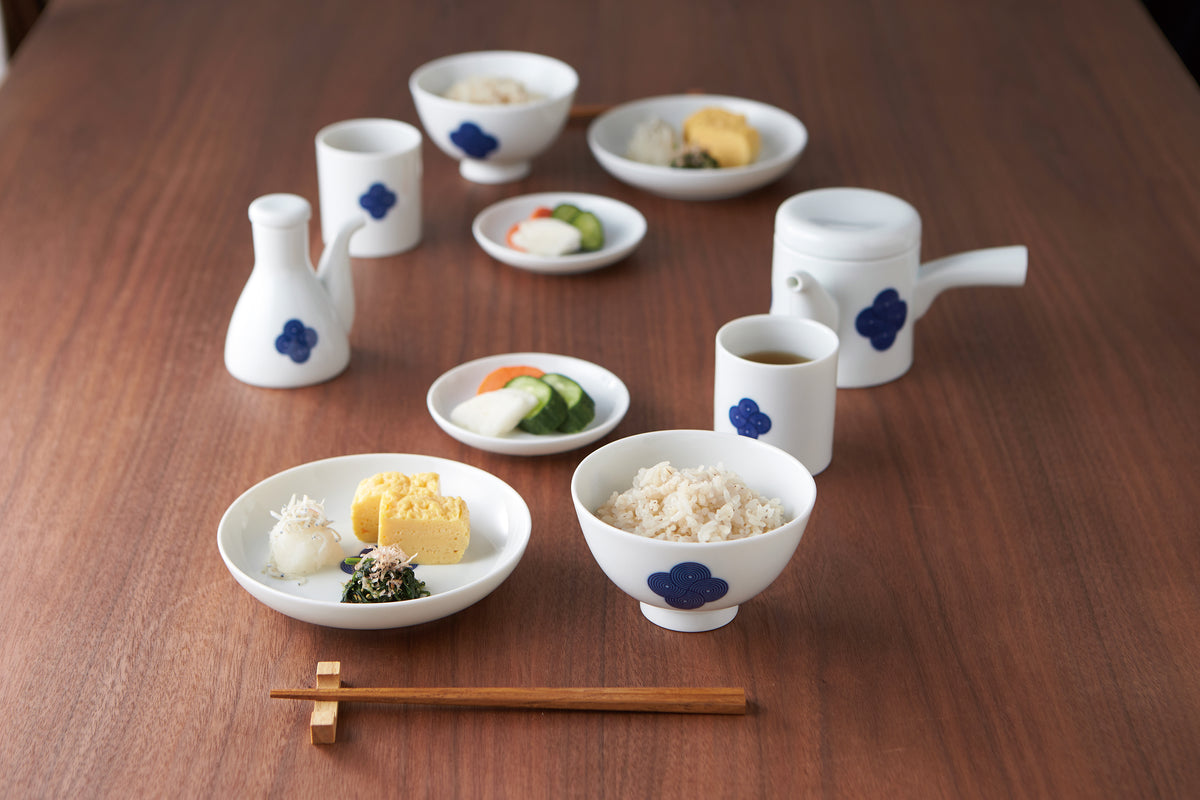
Originally designed in 1975, the Washoki Series was Sori Yanagi's first collection of tableware created specifically for Japanese dining. Characterized by its refined, straight-lined forms, the series reflects Yanagi's approach to creating functional, timeless objects for everyday use.
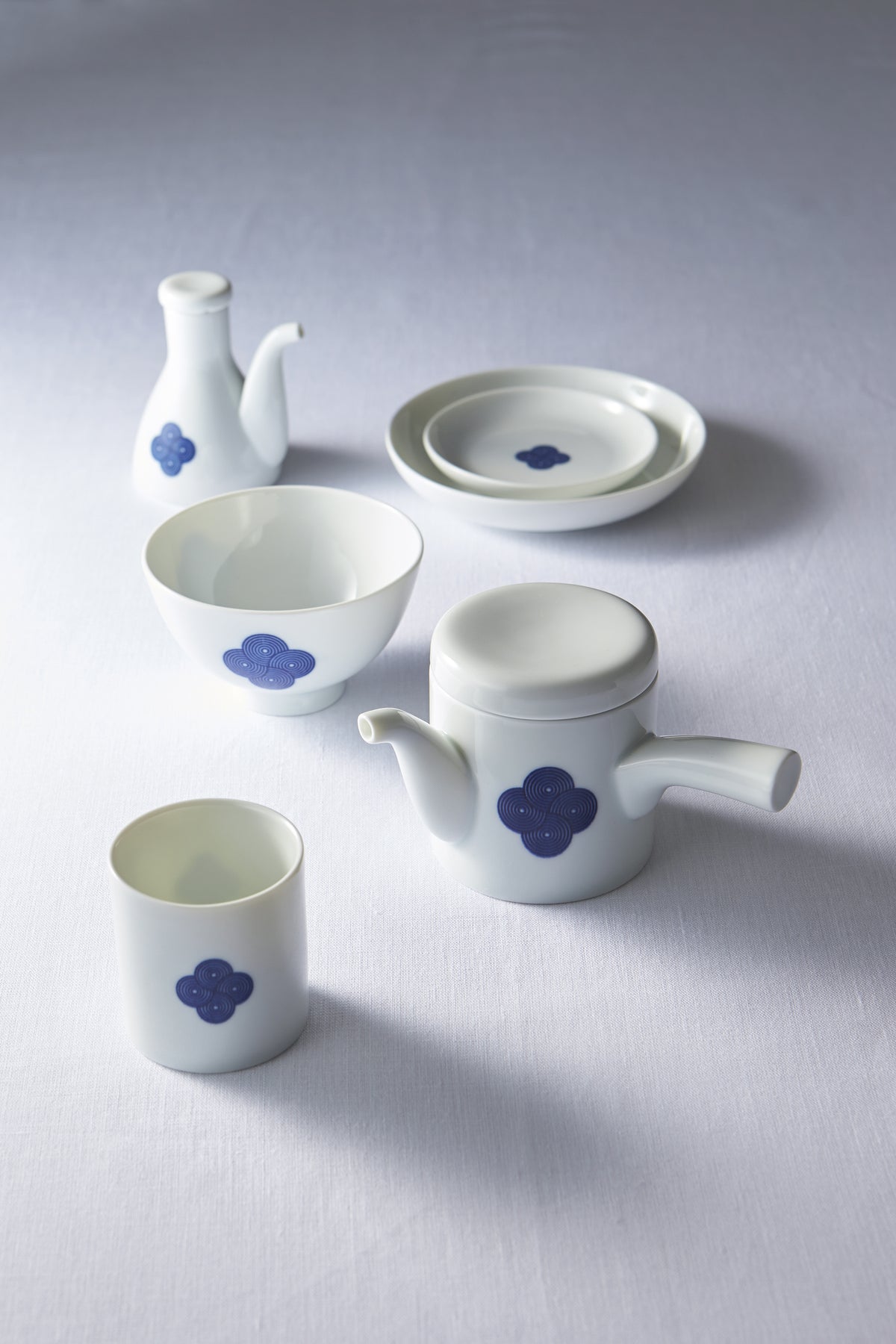
In 2022, the collection was faithfully reproduced by Japanese porcelain manufacturer Miyama under the supervision of YANAGI DESIGN. The revival carefully recreates the original forms and includes two finishes: Gosu Monzuke, featuring Yanagi's distinctive blue-and-white patterns, and Kohakujiki, a plain white porcelain finish that highlights the simplicity and beauty of the forms. Each piece is made in Mizunami, Gifu Prefecture, Japan.
Kyusu Teapot – Gosu Monzuke
This porcelain kyusu features a cylindrical body and a side handle for pouring tea. Sori Yanagi’s blue-and-white motif, inspired by the Naruto whirlpools, accents the clean lines of the teapot.
Brand | YANAGI DESIGN
Designer | Sori Yanagi
Year of Design | 1975
Country of Origin | Japan
Dimensions
Dimensions
W145 × D116 × H92 mm (220 mL)
Materials
Materials
Porcelain
Lead time
Lead time
In-stock items are typically dispatched within [ 1 weeks] business days.
*If an item is temporarily out of stock, we will contact you with an estimated shipping date.
Additional Information
Before first use, wash the product thoroughly with water or lukewarm water.
After use, wash off any food residue promptly and allow the product to dry completely before storing.
This product is dishwasher safe. However, overcrowding the dishwasher may cause damage. Always follow the dishwasher manufacturer's instructions.
When using a microwave, always place food inside the bowl. Heating an empty bowl may cause damage.
Avoid sudden temperature changes, such as immersing the bowl in water immediately after microwave heating, as thermal shock may cause cracking or breakage.
Do not use in an oven or over an open flame.
Avoid using abrasive cleaners, detergents containing abrasives, or metal scouring pads, as they may scratch the surface. Wash with a soft sponge instead.
Discontinue use if any cracks or fractures appear, for safety reasons.
* Shipping costs are shown at checkout. If you would like a shipping quotation, please use "Add to Quote" below to submit your request.
Couldn't load pickup availability
This item is on display at METROCS TOKYO and may be available for immediate takeaway.
Please contact us before visiting to confirm current availability.

For Customers Shipping to the USA
・Orders will be shipped via UGX or DHL. Small items with a total order weight of 5 kg or less will be shipped via UGX (Yu-Global Express by Japan Post).
・For general furniture items, or orders with a total weight of 5 kg or more, checkout will display an error. In that case, please use "Add to Quote" on the product page to request a shipping quotation. We will send you a shipping quotation by email as soon as it is ready.
・Import duties and taxes are not included in the shipping charges.
Any customs duties that may apply upon import are the responsibility of the customer.
For more information, please refer to our Shopping Guide and FAQs pages. If you have any questions, please contact us via Contact Us.
Sori Yanagi (1915–2011) was one of Japan's most influential industrial designers. His work spanned a wide range of fields, from furniture, including the iconic Butterfly Stool, which is part of the permanent collection of the Museum of Modern Art (MoMA) in New York, to kitchenware, tableware, the torch holder for the Tokyo Olympics, the entrance portals of the Kan-Etsu Tunnel on the Kan-Etsu Expressway, and pedestrian bridges.
His designs continue to be admired and appreciated by people around the world. In 2022, he was posthumously recognized as a Person of Cultural Merit by the Japanese government in honor of his outstanding contributions to design.
YANAGI DESIGN was founded by Sori Yanagi in 1953. The organization has consistently followed a hands-on approach to design, creating models by hand and refining ideas through repeated testing, always from the user's perspective.
It is also committed to promoting design awareness and education, passing on its design philosophy to younger generations.